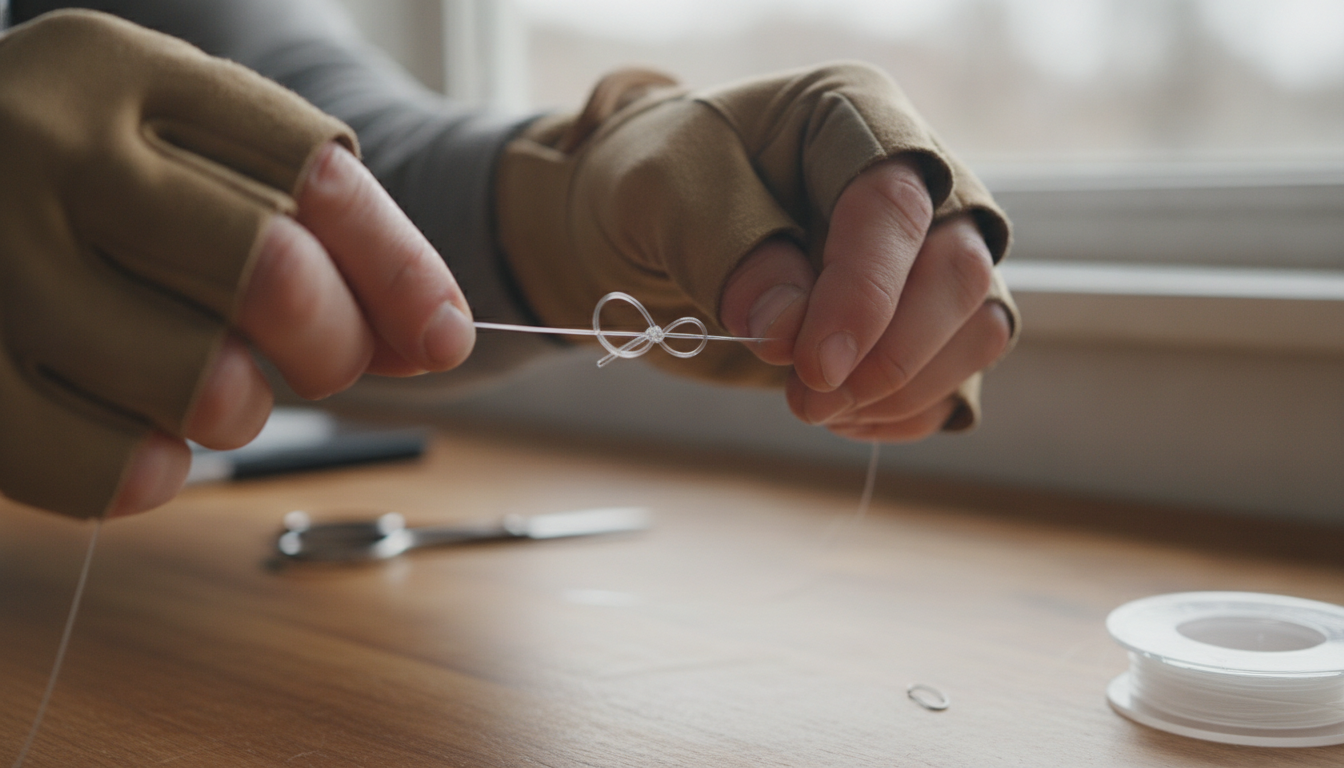
Every angler knows that the thrill of fishing goes beyond just casting a line. It’s about the moments spent waiting, the anticipation of a bite, and the joy of reeling in your catch. Yet, all of this can be undermined by one simple oversight: a poorly tied fishing knot. Understanding how to tie knots for fishing is essential. It can mean the difference between a trophy fish and a lost opportunity.
As you embark on your fishing journey, mastering the art of tying fishing knots will enhance your experience. Each knot you learn not only strengthens your connection to your tackle but also builds your confidence on the water. This guide will walk you through the fundamentals of fishing knots, helping you secure your line and tackle with ease. Get ready to dive into a world where your skills can truly shine.
In the following sections, you will discover various knots, techniques, and common mistakes to avoid. By the end, you will be equipped with the knowledge to tie reliable knots that keep your fishing adventures successful.
Key Takeaways
- Understanding fishing knots is crucial for every angler.
- Mastering knots can improve your catch rate significantly.
- Different knots serve different purposes in fishing.
- Common mistakes can lead to lost fish and tackle.
- Practice is key to becoming proficient at tying knots.
Understanding the Basics of a Fishing Knot
When you start your fishing journey, knowing how to tie a fishing knot is essential. A good fishing knot keeps your line secure and helps you catch more fish. This fishing knot guide will introduce you to the basics, ensuring you understand key concepts before diving into specific knots.
Here are some fundamental principles to consider:
- Knot Strength: A strong knot can withstand the force of a fish pulling on the line.
- Line Compatibility: Different knots work better with specific line types, such as monofilament or braided lines.
- Proper Technique: Learning the correct way to tie knots is crucial for ensuring they hold under pressure.
Familiarizing yourself with terms like tag ends, wraps, and knot seating will prepare you for the detailed instructions in the next sections. Understanding these basics will make learning beginner fishing knots much easier.
As you progress, you will find that the right knot can make a significant difference in your fishing success. With practice, you’ll gain confidence in your knot-tying skills, allowing you to focus on enjoying your time on the water.
Step-by-Step Guide on How to Tie Knots for Fishing
Tying fishing knots correctly is essential for a successful fishing experience. You need to prepare your line and hook properly before you start. This ensures that your knots will hold strong when you catch a fish. Follow these steps to master the art of tying fishing knots.
Preparing Your Line and Hook
Before you tie fishing knots, you must prepare your line and hook. Here are some key steps:
- Choose the right length of tag end. A longer tag end gives you more flexibility when tying.
- Inspect your hook eye for sharp edges. This prevents damage to your line.
- Select the correct line type for your fishing conditions.
Wrapping and Tightening Techniques
Once your line and hook are ready, focus on wrapping and tightening techniques. Proper techniques are crucial for effective fishing knot tying. Follow these tips:
- Wrap your line around the standing line. Aim for five to seven wraps for strength.
- Moisten the knot before tightening. This reduces friction and prevents damage.
- Seat the knot snugly. Ensure it is tight but not overly strained to avoid breakage.
By mastering these steps, you will enhance your ability to tie fishing knots. Strong knots are vital for securing your catch and enjoying your time on the water.
The Improved Clinch Knot: A Beginner Fishing Knot Essential
The Improved Clinch Knot is a must-know for anyone starting in fishing. This knot is popular among anglers due to its simplicity and effectiveness. It provides strong knot strength for fishing, making it reliable for various fishing line knots. Let’s explore how to tie this essential knot step by step.
How to Tie the Improved Clinch Knot
Follow these steps to tie the Improved Clinch Knot:
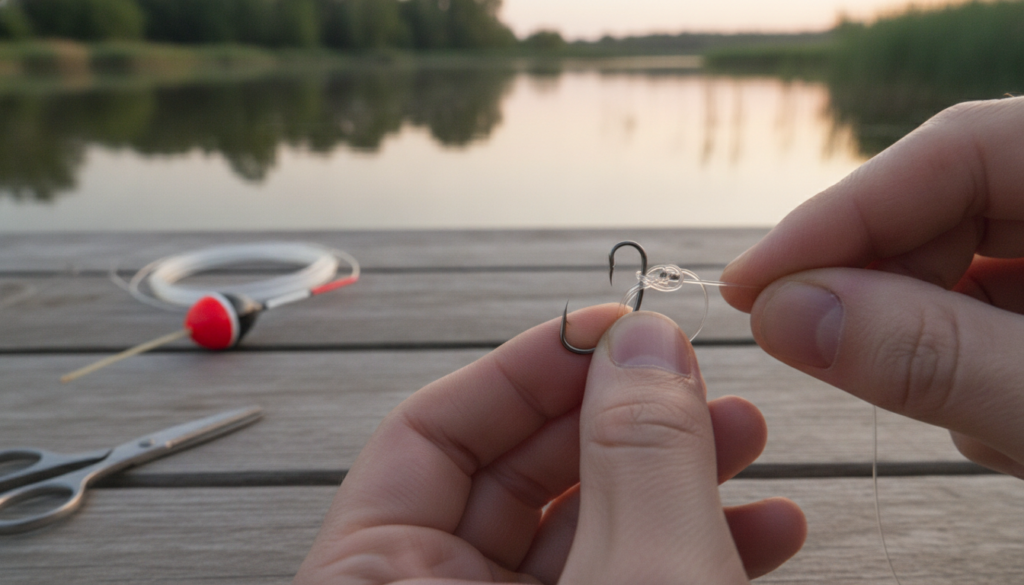
- Pass the end of your fishing line through the eye of the hook.
- Wrap the line around itself five to seven times.
- Take the end of the line and pass it through the small loop near the eye of the hook.
- Now, pass the end through the larger loop you just created.
- Wet the knot with water or saliva to ensure it tightens smoothly.
- Pull both ends of the line to tighten the knot securely.
Line Type Performance and Wrap Counts
The Improved Clinch Knot works well with different types of fishing lines. The number of wraps you use can depend on the line type:
- Monofilament: 5-7 wraps for optimal strength.
- Fluorocarbon: 5 wraps recommended for best results.
- Braided Line: 7-10 wraps for maximum grip.
This knot remains a reliable choice for light to medium tackle fishing. When fishing with heavier lines or in saltwater, consider variations like the Double Clinch Knot for added security.
Exploring the Strongest Fishing Knots for Different Situations
When it comes to fishing, knowing the strongest fishing knots can make a significant difference. Different knots serve various purposes, and selecting the right one for your situation is crucial. You want to ensure your knot can withstand the pressure of a big catch.
The FG knot is one of the strongest fishing knots available. It excels in connecting braided line to leaders, providing excellent strength and reliability. This knot minimizes bulk, allowing for smoother casts and less chance of snagging. For many anglers, the FG knot is a go-to choice.
Other notable knots include:
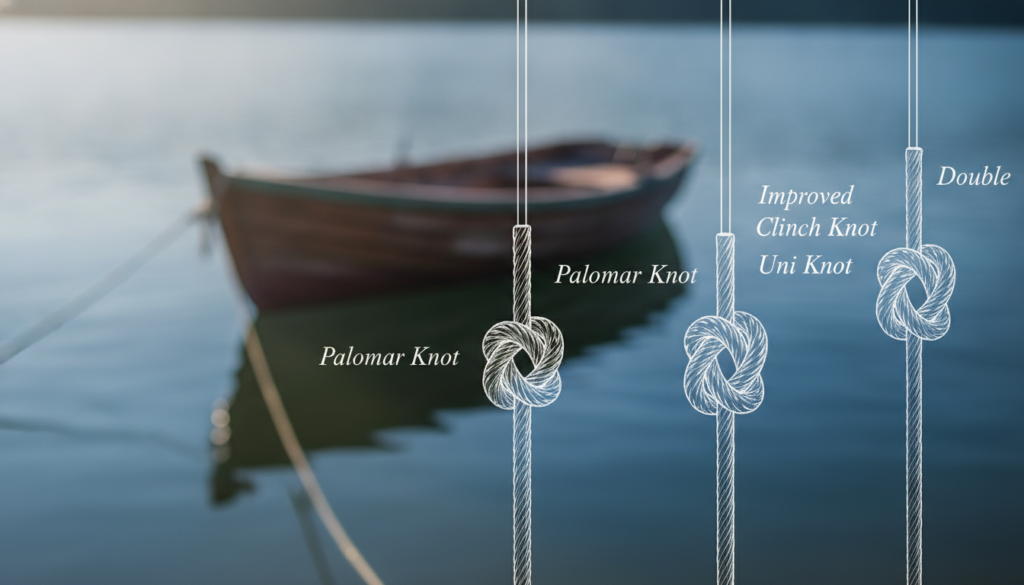
- Palomar Knot: Known for its simplicity and strength, this knot works well with various line types.
- Uni Knot: Versatile and easy to tie, it performs well in many fishing scenarios.
- Double Uni Knot: Ideal for joining two lines, it offers excellent strength and security.
Choosing the best fishing knots for your specific needs can help you avoid failures. Understanding the unique strengths of each knot allows you to adapt to different fishing situations. For example, the Palomar knot is great for quick setups, while the FG knot is best for heavy-duty connections.
In summary, mastering these knots can enhance your fishing experience. The right knot can mean the difference between landing that trophy fish or losing it. Take the time to practice and choose wisely.
Fishing Knot Tying Techniques for Braided and Fluorocarbon Lines
Tying knots for fishing can be tricky, especially with braided and fluorocarbon lines. Each line type has its own unique challenges. Understanding these challenges will help you choose the right fishing knot tying techniques. This section covers how to tackle these difficulties effectively.
Challenges with Braided Line
Braided lines are known for their strength but can be slippery. This can lead to knots slipping under pressure. Some common issues include:
- Slippage of knots like the Improved Clinch.
- Difficulty in tightening knots securely.
- Reduced friction due to the smooth surface of braided lines.
For braided lines, consider using knots such as the Palomar or FG knot. These knots provide better security and hold under tension.
Tips for Fluorocarbon Line Knots
Fluorocarbon lines have their own set of challenges. They can be stiff and prone to heat damage. Here are some tips to improve your fishing line knots:
- Moisten the knot before tightening to reduce friction.
- Use extra wraps to secure the knot and prevent slippage.
- Ensure the knot is seated properly to avoid breakage.
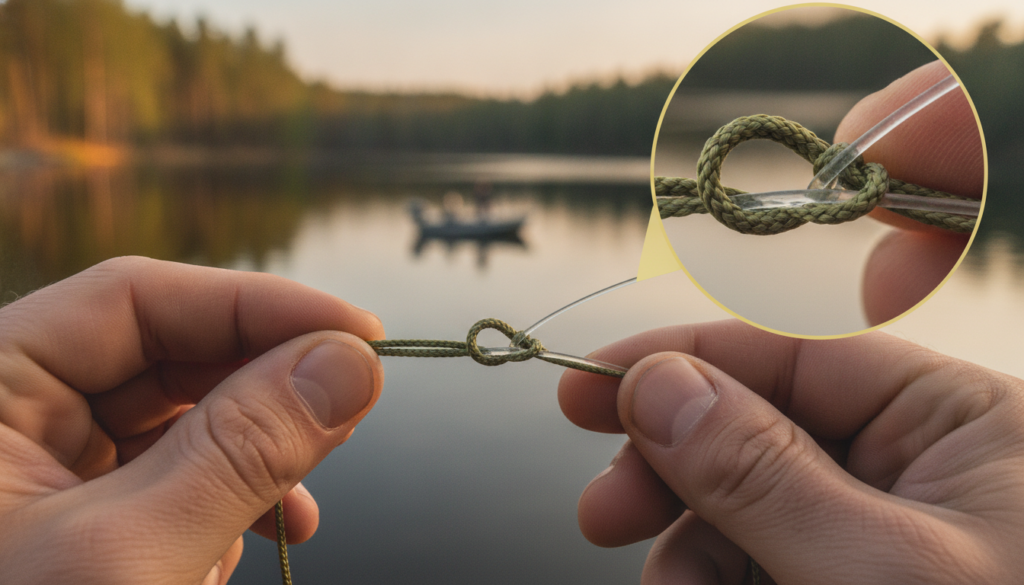
Using these techniques will enhance your fishing experience. Strong knots are essential for successful fishing trips. By mastering these fishing knot tying techniques, you will ensure that your knots hold strong, regardless of the line type.
| Line Type | Common Knots | Challenges | Tips |
|---|---|---|---|
| Braided | Palomar, FG | Slippage, difficulty tightening | Use secure knots |
| Fluorocarbon | Improved Clinch, Uni | Heat damage, stiffness | Moisten, extra wraps |
Choosing the Best Fishing Knots for Various Tackle and Species
Selecting the right fishing knot is crucial for successful fishing. Different tackle weights and target species require specific knots to ensure you have the best chance of landing your catch. Understanding which knots to use can enhance your fishing experience and improve your success rate.
For light to medium tackle, you will want knots that offer a balance of strength and ease of tying. The following knots are highly recommended:
Light to Medium Tackle Knots
- Improved Clinch Knot: This knot is simple to tie and works well with lighter lines.
- Uni Knot: Versatile and strong, this knot is great for various line types.
When you move to heavy-duty or saltwater fishing, the stakes get higher. Stronger knots become essential to handle larger, more powerful fish. Consider these options:
Choosing the right rod is also important when building your fishing setup. Our guide to the Best Fishing Rod for Beginners explains what to look for when choosing your first rod.
Knots for Heavy Duty and Saltwater Fishing
- Palomar Knot: Known for its strength, this knot is perfect for heavy lines.
- Double Clinch Knot: Offers extra security for larger catches.
- FG Knot: Ideal for connecting braided lines to leaders, ensuring reliability in tough conditions.
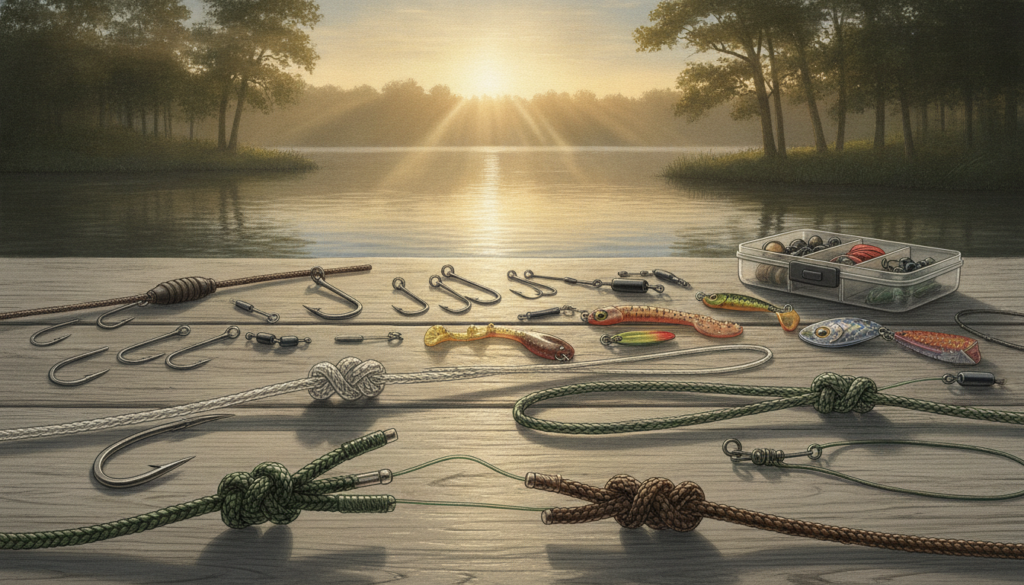
Choosing the best fishing knots based on your tackle and the species you target will significantly impact your fishing success. Ensure you practice tying these knots to gain confidence before heading out on your next fishing adventure.
Fishing Line Knots: Comparing Popular Knots Like Palomar, Uni, and Loop Knots
When it comes to fishing, knowing the right knots can make a significant difference. This fishing knot guide will help you compare popular knots like the Palomar, Uni, and Loop knots. Each knot has its strengths and weaknesses, making them suitable for different fishing situations.
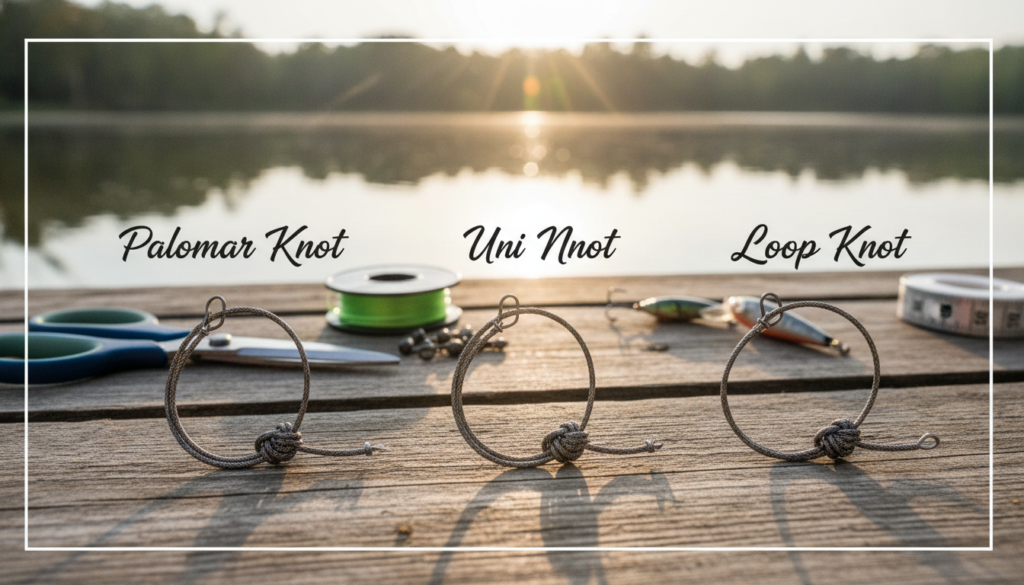
The Palomar knot is renowned for its strength retention, maintaining up to 95% of line strength. This knot is ideal for securing hooks and lures, ensuring they stay in place during your fishing adventure. The Uni knot is versatile and easy to tie, making it a favorite among anglers. It works well for connecting lines of different diameters and is useful for tying to hooks and swivels. The Loop knot allows for better lure action, which can be crucial when targeting species that are picky about their bait.
Here’s a quick comparison of these knots:
| Knot Type | Strength Retention | Ease of Tying | Best Use Case |
|---|---|---|---|
| Palomar | 95% | Moderate | Hooks and lures |
| Uni | 85% | Easy | Line connections |
| Loop | 80% | Moderate | Lure action |
Choosing the right knot can enhance your fishing experience. Each knot serves a unique purpose, and understanding their differences helps you select the strongest fishing knots for your needs. Remember to practice tying these knots to gain confidence and efficiency on the water.
Common Mistakes When Tying Fishing Knots and How to Avoid Them
Tying a fishing knot may seem simple, but many anglers make mistakes that can lead to knot failure. Understanding these common errors can help you improve your fishing knot tying techniques and increase your chances of landing that big catch.
Slippage and Breakage Causes
Slippage and breakage are two major issues when it comes to fishing knots. These problems often arise from:
- Insufficient wraps around the line
- Skipping essential steps in the knot-tying process
- Not moistening the knot before tightening
- Jerking the line too quickly while securing the knot
Proper Knot Seating and Moistening
To avoid slippage and breakage, focus on proper knot seating and moistening. Follow these tips:
- Always moisten your knot with water or saliva before tightening. This reduces heat and friction.
- Ensure the knot is seated correctly by pulling on both ends of the line gently.
- Check for any twists or tangles in the line before finalizing the knot.
By being aware of these common mistakes and implementing these tips, you can enhance your fishing knot tying techniques. This will lead to stronger knots and fewer lost fish due to knot failure.
Conclusion
Mastering essential fishing knots is crucial for any angler. This fishing knot guide emphasizes the importance of a few key knots like the Improved Clinch, Palomar, and Uni knots. These beginner fishing knots are versatile and reliable, making them suitable for various fishing scenarios.
Regular practice will help you build confidence in your knot-tying skills. You want to ensure strong connections every time you head out on the water. While many knots exist, focusing on a select few will cover nearly all your fishing needs.
With these knots in your toolkit, you will enhance your fishing experience and increase your chances of landing more fish. Embrace the learning process and enjoy your time fishing, knowing you have the skills to make every trip successful.