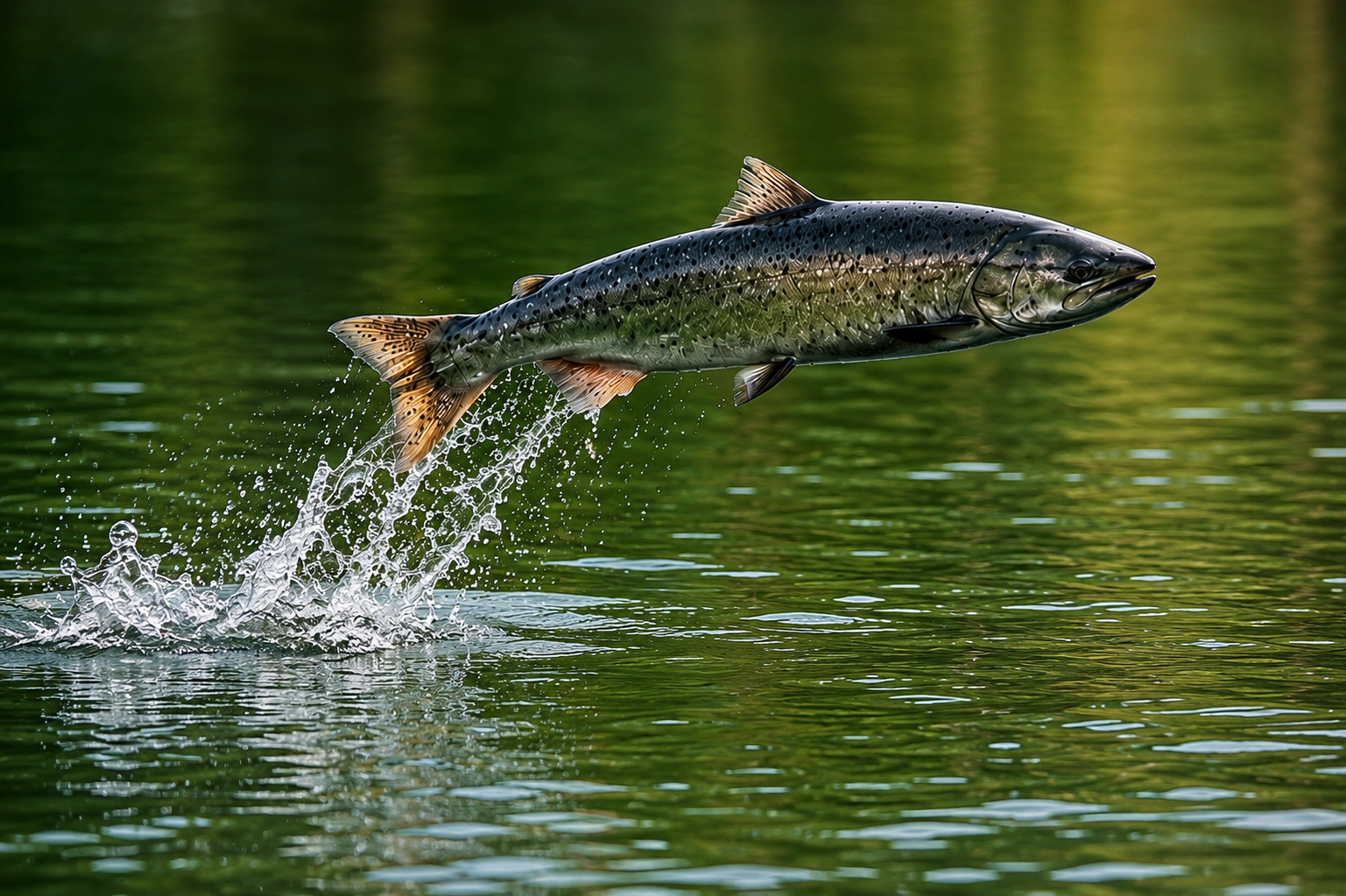
The Atlantic salmon fish (Salmo salar) is one of the world’s most iconic fish species. Renowned for its pink flesh, incredible strength, and remarkable migration between rivers and the Atlantic Ocean, Atlantic salmon has become an important part of commercial fisheries, recreational angling, and aquatic ecosystems.
Whether you’re interested in salmon fishing, healthy seafood, or learning about marine life, Atlantic salmon is a fascinating species worth exploring.
What Is Atlantic Salmon?
Atlantic salmon belongs to the Salmonidae family, which also includes trout, char, and other salmon species. It is an anadromous fish, meaning it spends part of its life in freshwater rivers before migrating to the ocean and eventually returning to its birthplace to reproduce.
Because of its strength and endurance, Atlantic salmon is considered one of the most prized fish among sport anglers worldwide.
Scientific Classification
| Classification | Details |
|---|---|
| Common Name | Atlantic Salmon |
| Scientific Name | Salmo salar |
| Family | Salmonidae |
| Type | Anadromous (Migratory Fish) |
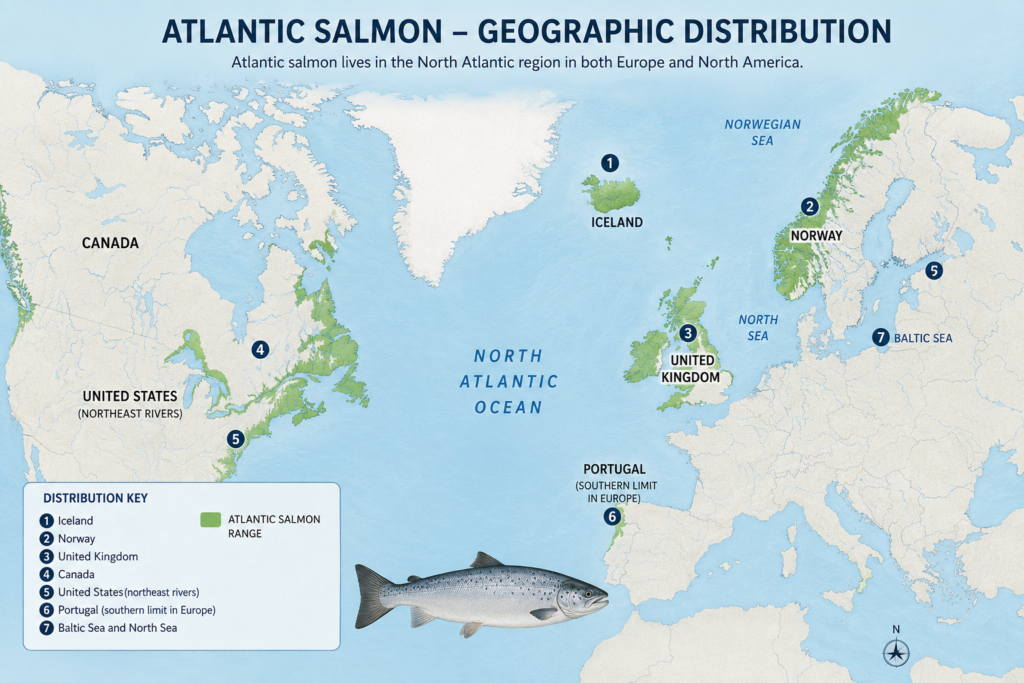
Geographic Distribution
Atlantic salmon naturally inhabits the North Atlantic Ocean and nearby river systems. Major populations are found in:
- Norway
- Iceland
- Scotland
- Ireland
- United Kingdom
- Canada
- Northeastern United States
- Baltic Sea
- North Sea
- Portugal (southern European range)
Clean, cool rivers that connect directly to the ocean are essential for the survival and reproduction of this species.
Physical Characteristics
Atlantic salmon are built for long-distance swimming and powerful migrations.
Main Features
- Streamlined, torpedo-shaped body
- Silver coloration while living in the ocean
- Small adipose fin between the dorsal and tail fin
- Powerful muscular body
- Dark spots above the lateral line
- Color changes during the breeding season
Average Size
- Length: 48–50 cm (19–20 inches) on average
- Maximum Length: More than 1 meter (3.3 feet)
- Weight: Usually 2–8 kg, with exceptionally large individuals exceeding 20 kg
Atlantic Salmon Life Cycle
One of the most remarkable characteristics of Atlantic salmon is its unique life cycle.
1. Freshwater Stage
Adult females lay their eggs in gravel nests called redds in clean freshwater rivers.
After hatching, young salmon remain in freshwater for one to three years while feeding and growing.
2. Migration to the Ocean
As juveniles mature, they undergo a transformation known as smoltification, allowing them to survive in saltwater.
They then migrate downstream toward the Atlantic Ocean.
3. Ocean Growth Phase
In the ocean, Atlantic salmon grow rapidly thanks to abundant food resources.
Their diet includes:
- Small fish
- Shrimp
- Krill
- Crustaceans
- Marine invertebrates
Many salmon travel thousands of kilometers during this stage.
4. Return Migration
Once sexually mature, Atlantic salmon return to the exact river where they were born.
This extraordinary navigation ability is known as homing behavior and is one of the most fascinating migrations in nature.
Reproduction
Spawning generally occurs during autumn and early winter.
The process includes:
- Females dig nests in gravel riverbeds.
- Eggs are laid inside the nest.
- Males fertilize the eggs.
- Eggs incubate for approximately 13–19 weeks.
- Young salmon hatch and remain in freshwater before beginning their ocean migration.
Unlike Pacific salmon, many Atlantic salmon survive spawning and may reproduce more than once.
Feeding Habits
Atlantic salmon change their diet as they grow.
In Freshwater
Young salmon feed mainly on:
- Aquatic insects
- Insect larvae
- Small crustaceans
- Tiny freshwater organisms
In the Ocean
Adult salmon consume:
- Herring
- Sand eels
- Capelin
- Shrimp
- Krill
- Other small fish
This protein-rich diet allows rapid growth during their marine stage.
Atlantic Salmon Fishing
Atlantic salmon fishing is one of the most respected forms of recreational angling and an important commercial industry in some regions.
Common Fishing Methods
- Fly fishing
- Spinning rods
- Artificial lures
- Natural bait (where permitted) .
- When targeting Atlantic salmon, learning how to tie a fishing knot properly is an important skill for securing hooks, lures, and fishing line.
Popular Fishing Locations
- Rivers
- Estuaries
- Coastal waters
Why Anglers Love Atlantic Salmon
- Extremely powerful fighter
- Long energetic runs
- Difficult to catch
- Highly respected game fish
Its combination of strength and rarity makes Atlantic salmon one of the most prestigious sport fish worldwide.
Atlantic Salmon vs. Pink Salmon
Although both are salmon species, they differ significantly.
| Atlantic Salmon | Pink Salmon |
|---|---|
| Lives in the Atlantic Ocean | Lives mainly in the Pacific Ocean |
| Larger body size | Smaller body size |
| Can spawn multiple times | Usually spawns once before dying |
| Longer lifespan | Shorter lifespan |
| Scientific name: Salmo salar | Scientific name: Oncorhynchus gorbuscha |
Both species are edible and nutritious but have different life histories and habitats.
Nutritional Benefits
Atlantic salmon is widely considered one of the healthiest seafood choices available.
If you’re looking for an easy way to enjoy salmon at home, try our Fish Soup Recipe for a delicious homemade seafood meal.
Rich In
- Omega-3 fatty acids
- High-quality protein
- Vitamin D
- Vitamin B12
- Selenium
- Potassium
Health Benefits
- Supports heart health
- Promotes brain function
- Helps reduce inflammation
- Supports healthy muscles
- Contributes to strong bones
- May improve overall cardiovascular health
Threats Facing Atlantic Salmon
Wild Atlantic salmon populations have declined in many regions because of several environmental pressures.
Major threats include:
- Water pollution
- Climate change
- Hydroelectric dams blocking migration
- Habitat destruction
- Overfishing
- River warming
- Invasive species
- Diseases and parasites
Protecting natural habitats is essential for the survival of wild salmon.
Conservation Efforts
Scientists, governments, and conservation organizations continue working to restore Atlantic salmon populations.
Important conservation measures include:
- Restoring river habitats
- Building fish ladders and migration passages
- Monitoring wild salmon populations
- Reducing pollution
- Regulating commercial and recreational fishing
- Supporting sustainable aquaculture practices
These efforts help maintain healthy salmon populations for future generations.
Interesting Facts About Atlantic Salmon
- Atlantic salmon can swim thousands of kilometers during migration.
- They often return to the exact river where they were born.
- Some individuals live for up to 8 years.
- Their body color changes during the spawning season.
- They are among the most extensively studied fish species in the world.
- Unlike many Pacific salmon, some Atlantic salmon survive spawning and reproduce again.
Frequently Asked Questions (FAQ)
What is Atlantic salmon?
Atlantic salmon (Salmo salar) is a migratory fish that spends part of its life in freshwater rivers and part in the Atlantic Ocean.
Why is Atlantic salmon fishing so popular?
Because Atlantic salmon is powerful, challenging to catch, and considered one of the world’s premier sport fish.
Is Atlantic salmon healthy to eat?
Yes. It is rich in omega-3 fatty acids, high-quality protein, vitamin D, and several essential nutrients that support overall health.
What is the difference between Atlantic salmon and pink salmon?
Atlantic salmon lives in the Atlantic Ocean, grows larger, and may spawn multiple times, while pink salmon is a Pacific species with a shorter life cycle.
How long does Atlantic salmon live?
Most Atlantic salmon live between 4 and 8 years, depending on environmental conditions.
Where can Atlantic salmon be found?
They are found throughout the North Atlantic Ocean and connected river systems in Europe and North America.
Conclusion
The Atlantic salmon fish is one of the most remarkable migratory species on Earth. Its incredible life cycle, powerful swimming ability, nutritional value, and ecological importance make it a vital part of both freshwater and marine ecosystems.
From thrilling salmon fishing adventures to its role as one of the healthiest seafood options, Atlantic salmon continues to captivate anglers, scientists, and seafood lovers alike. Protecting its habitats through responsible conservation ensures that future generations can continue to appreciate this extraordinary fish.