
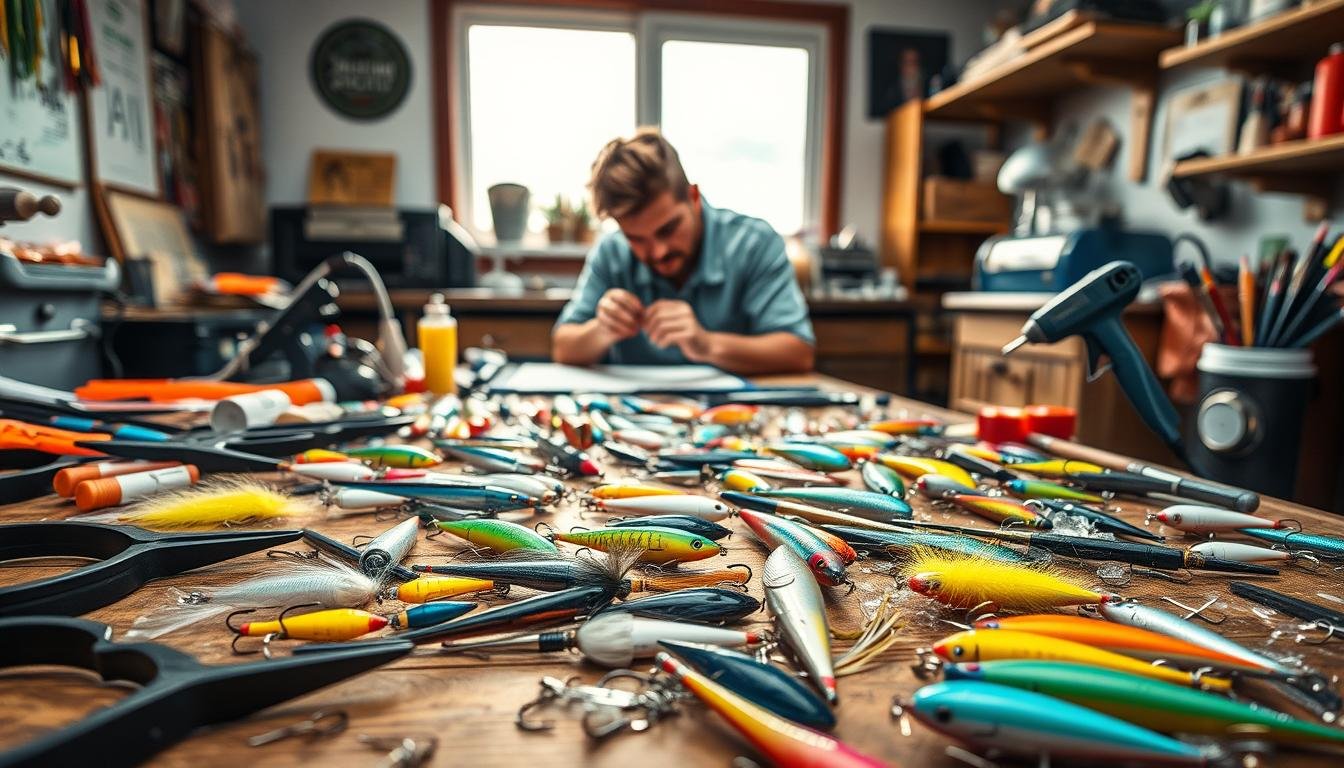
Imagine standing by the water’s edge, rod in hand, waiting for that perfect moment. You know the thrill of a tug on the line, the excitement of reeling in a catch. Learning how to make fishing lures can enhance that experience. It lets you tailor your gear to specific conditions and target species.
When is the best time of day to go fishing? Understanding fish behavior is crucial for success. This guide will walk you through the essential steps of how to make fishing lures that perform reliably. By mastering these techniques, you can save money and increase your chances of landing that trophy catch.

Edit
Full screen
Delete
how to make fishing lures
Key Takeaways
- Customize your lures for specific fishing conditions.
- Understand fish behavior to improve your chances of success.
- Learn the essential tools and materials needed for lure making.
- Experiment with different designs to attract various fish species.
- Practice sustainable lure crafting to protect the environment.
- Join a community of fellow lure makers for support and ideas.
Understanding the Basics of Fishing Lures
Fishing lures are key for anglers. They look and move like real prey to draw fish. Learning about lures can make fishing better. Making your own lures lets you match them to your local fishing spots.
What Are Fishing Lures?
Fishing lures are fake devices to lure fish. They vary in shape, size, and color. Each material has its own role. The lure’s success often depends on the fishing optimal time, which is the best time to fish.
Different Types of Fishing Lures
There are many types of fishing lures, each with its own features:
- Spoons: These lures have a concave shape that creates a wobbling action.
- Plugs: Designed to imitate baitfish, they can float or sink.
- Jigs: These are versatile lures that can be used in various water conditions.
Why Handmade Lures Can Be Effective
Handmade lures have big benefits. You can make them look like local baitfish, unlike mass-made ones. Making your own lures lets you be creative and try new things. This can lead to better fishing trips.
Essential Tools and Materials for Making Lures
Making your own fishing lures can be very rewarding. To start, you’ll need some key tools and materials. The right gear makes crafting easier and improves your lure’s quality. Plan your projects for fishing peak hours to test your lures when fish are most active.
Basic Tools You’ll Need
Here are some basic tools to get you started:
- Pliers
- Wire cutters
- Carving knives
- Drill with bits
- Hot glue gun
Recommended Materials for Beginners
Choosing the right materials is key for making effective lures. Beginners should use:
- Balsa wood for buoyancy
- Stainless steel wire for durability
- High-quality hooks for better catch rates
- Paints for customization
Safety Precautions When Crafting Lures
Safety is always first. Here are some safety tips:
- Wear protective eyewear to shield your eyes from debris.
- Use gloves when handling sharp tools or hot materials.
- Keep your workspace organized to avoid accidents.
With the right tools and materials, you can make lures that attract fish well. Always remember to keep safety in mind while crafting.
Choosing the Right Design for Your Lure
When making fishing lures, the design is key. The right design can really attract fish. Knowing what influences your choice can help you catch more fish.
Factors That Influence Lure Design
Several key factors determine the best design for your lure:
- Water Depth: Deeper waters may require lures that dive deeper.
- Current Speed: Strong currents may need heavier lures that can stay in place.
- Target Species: Different fish prefer different lure types.
- Ideal Fishing Time: Fish behavior changes throughout the day.
Popular Designs for Freshwater vs. Saltwater
Designs can vary greatly between freshwater and saltwater fishing:
- Freshwater Lures: Often mimic insects or small minnows.
- Saltwater Lures: Require sturdier materials to withstand harsher conditions.
Experimenting with Shapes and Sizes
Don’t hesitate to try different shapes and sizes for your lures. This experimentation can lead to discovering what works best in your fishing environment. Consider:
- Changing the body shape to alter swimming action.
- Adjusting weight distribution for better casting.
- Testing various sizes to see what fish respond to best.
Edit
Delete
Crafting a Simple Spinner Lure
Making your own spinner lure is a fun project. It’s effective and doesn’t need much special gear. To get the best results, fish during the best time of day. The lure’s flash and vibration can draw in bass and trout.
Materials Needed for a Spinner Lure
- Stainless steel shaft
- Clevis
- Spinner blade
- Beads (various colors)
- Fishing hook
- Split ring
- Wire cutters
- Pliers
Step-by-Step Guide to Assembly
- Cut the stainless steel shaft to your desired length.
- Thread the clevis onto the shaft.
- Attach the spinner blade to the clevis.
- Add beads to the shaft for decoration and weight.
- Form a loop at the end of the shaft for the hook.
- Secure the hook with a split ring.
Tips for Customizing Your Spinner Lure
Customizing your lure can make it more effective. Here are some ideas:
- Use different blade colors to catch the fish’s attention.
- Add holographic tape for extra flash.
- Experiment with bead colors to match local baitfish.
Making Your Own Jigs
Jigs are key for anglers wanting to catch more fish. Learning to make fishing lures, like jigs, boosts your success. Jigs are flexible and fit many fishing situations. They’re a must-have in every tackle box.
During the best fishing times, a well-made jig can draw in more fish. This ups your chances of a good day on the water.
Jig Types and Their Purposes
There are various jigs for different needs. Here are some common ones:
- Standard Jigs: Ideal for general fishing.
- Football Jigs: Great for bottom fishing.
- Swim Jigs: Designed for retrieving through the water column.
- Finesse Jigs: Best for targeting finicky fish.
Creating a Simple Jig from Scratch
Making a basic jig is easy. Just follow these steps:
- Gather your materials: lead, hooks, and skirts.
- Heat the lead until it melts.
- Pour the lead into a jig mold with the hook inserted.
- Allow the jig to cool and harden.
- Add a skirt made of silicone or bucktail for movement.
Painting and Finishing Techniques for Jigs
Finishing your jigs right is key for lasting use. Here are some methods:
- Powder Coating: Provides a tough finish that resists chipping.
- Painting: Use high-quality paint to add color and patterns.
- Sealing: Apply a clear coat to protect your design.
With these methods, you can make jigs that look good and last. Enjoy making your own jigs. See how they do during the best fishing times.
How to Create a Crankbait
Making a crankbait is fun for anyone who wants to learn about fishing lures. This lure imitates prey in the water. It’s very effective during the best fishing times. Here’s a simple guide to make your own.
Essential Components of a Crankbait
First, know the key parts of a crankbait. Each part is vital for its success.
- Body: This is the main part that shapes the lure.
- Bill: It decides how deep the lure goes.
- Weight: It keeps the lure balanced for the right movement.
- Hooks: They’re key for catching fish.
Crafting the Body and Bill of the Lure
Begin by carving the body from wood or plastic. Shape it to get the right wobble in the water. Attach the bill at the right angle for proper diving. Here’s how:
- Pick your material (wood or plastic).
- Cut the body to your shape.
- Securely attach the bill.
Painting and Sealing Your Crankbait
After building, painting and sealing are key. Use waterproof epoxy to seal the body. This keeps water out and your paint looking good. Here are some tips:
- Choose durable paint.
- Apply multiple coats for a bright finish.
- Wait for it to dry fully before fishing.

Edit
Full screen
Delete
how to make fishing lures
By following these steps, you can make a crankbait that boosts your fishing. Enjoy making lures and see your catch rate improve during the best fishing times.
Tips for Painting Fishing Lures
Painting fishing lures is the final step to make them attractive to fish. A well-painted lure can look like local baitfish, drawing in predators. Knowing the right techniques can make your lure more effective, especially during the best fishing times.
Choosing the Right Paint for Longevity
Choosing the right paint is key for durability. Look for paints that are waterproof and won’t fade easily. Some good choices include:
- Acrylic paints for bright colors
- Enamel paints for a durable finish
- Spray paints for an even coat
Techniques for Applying Patterns
Creating eye-catching patterns can make your lures stand out. Here are some effective techniques:
- Airbrushing for a smooth, professional look
- Using stencils to create realistic scale patterns
- Layering colors for depth and dimension
Top Coats That Protect Your Lures
Applying a clear top coat is crucial. It keeps your artwork safe from damage. Consider these options:
- Polyurethane for a strong, waterproof seal
- Epoxy resin for a glossy finish
- Clear spray sealants for easy application
By following these tips, you can make stunning lures that catch the eye. A well-painted lure not only looks good but also boosts your chances of catching fish during the best fishing times.
Testing Your Lures for Effectiveness
Testing your lures is key to making them work well. Field tests show how your lure performs in real conditions. Testing during the best fishing times helps you see how fish react to your lure.
Watching your lure in action helps spot any problems. You might need to make some changes.
How to Conduct Field Tests
Field tests need careful planning. Here’s how to do it right:
- Choose a spot known for fish activity.
- Test your lure at different depths and speeds.
- Watch how the lure moves in clear water.
- Keep notes on fish reactions and any catches.
Evaluating Lure Performance
After testing, it’s time to check how your lure did. Look at these points:
- Did the lure swim right?
- Was the buoyancy just right?
- How did fish react to the lure?
Making Adjustments Based on Feedback
Based on what you saw, you might need to tweak things. Here are some common changes:
- Change the weight for better buoyancy.
- Adjust the hook size for better catches.
- Modify the line tie for better tracking.
These tweaks can make a big difference. Testing your lures well ensures your hard work pays off.
Storage and Maintenance of Fishing Lures
Keeping your fishing lures in good shape is as important as making them. Proper care helps them last longer and work better for your next fishing trip. Here are some tips for storing and maintaining your lures.
Best Practices for Storing Lures
Storing your lures right can stop damage and tangling. Here are some helpful tips:
- Use tackle boxes with separate compartments to keep lures organized.
- Avoid overcrowding to protect the paint from scratches.
- Store lures in a cool, dry place to stop rust and corrosion.
Cleaning and Keeping Lures in Good Condition
After each fishing trip, clean your lures well. Follow these steps:
- Rinse lures with fresh water, especially after saltwater use.
- Dry them well to stop rust on hooks and split rings.
- Check for any wear, like rust or cracks.
When to Repair or Replace Your Lures
Regular checks can tell you when to fix or replace your lures. Look for:
- Rusted hooks that may not hold fish well.
- Cracked bodies that can hurt the lure’s performance.
- Worn-out paint that may make fish less attracted.
By following these storage and maintenance tips, your lures will stay effective. This lets you focus on catching fish!

Edit
Full screen
Delete
how to make fishing lures maintenance
Sustainable Practices in Lure Making
Learning to make fishing lures can impact the environment. Sustainable practices protect our waterways and improve your fishing. Here are important areas to focus on.
Using Eco-Friendly Materials
Choosing the right materials is key. Go for non-toxic options that are better for the planet. Some good choices include:
- Bismuth for jig heads
- Steel hooks instead of lead
- Biodegradable plastics for lure bodies
Responsible Fishing Techniques
Using responsible fishing methods helps the environment. Try these techniques:
- Using barbless hooks for easier catch and release
- Practicing catch and release to maintain fish populations
- Following local fishing regulations to protect habitats
The Benefits of Sustainable Lure Crafting
Sustainable practices have many benefits:
- Contributes to the health of waterways
- Ensures future generations can enjoy fishing
- Promotes a positive image for the fishing community
By making fishing lures sustainably, you help our waterways. This commitment is good for nature and makes fishing better for you.
Joining a Community of Lure Makers
Connecting with others who love making fishing lures can really help you grow. Being part of a community lets you learn from pros and share your own ideas. Here are some ways to find and join these groups.
Finding Online and Local Lure Making Groups
There are many places to meet other lure makers. Check out these options:
- Online forums focused on fishing and lure making.
- Social media groups where people share tips and projects.
- Local fishing clubs with workshops and meetups.
Sharing Tips and Tricks with Fellow Enthusiasts
Sharing what you know can be very rewarding. Here are ways to contribute:
- Post your projects and ask for feedback.
- Give advice on materials and techniques.
- Learn from others’ experiences.
Attending Workshops and Events
Going to events can really improve your skills. Look for:
- Workshops led by experienced lure makers.
- Fishing expos with the latest tools and techniques.
- Local meetups to meet other crafters.
Being part of a community keeps you motivated and inspired. As you learn to make fishing lures, sharing your journey can lead to new friendships and opportunities.
Conclusion: Enjoying the Art of Lure Making
Mastering lure making adds a special joy to fishing. It lets you understand fish behavior and what makes a lure work. This knowledge makes every catch more exciting.
Exploring lure crafting opens up new designs and techniques. Catching a fish with your own lure is incredibly thrilling. It adds a personal touch to your fishing adventures.
Sharing your love for lure making can inspire others. Encourage friends and family to try making their own fishing gear. Together, you can enjoy the creativity and satisfaction of this hobby.
FAQ
When is the best time of day to go fishing?
The best times to fish are early morning and late afternoon to evening. These times match when fish are most active, making it easier to catch them.
What are the fishing optimal times?
Optimal fishing times depend on weather, moon phases, and water temperature. The best hours are just before sunrise and after sunset, when fish are most active.
How can I determine the ideal fishing time?
Use fishing calendars or apps to find the best times based on local conditions. Also, watch the weather and learn about fish behavior to find the ideal time.
What are peak fishing hours?
Peak hours are when fish are most likely to feed and be active. These are usually dawn and dusk, and overcast days, which are great for fishing.
Are there specific fishing optimal periods for different species?
Yes, different fish species are active at different times. Bass are active in low light, while trout feed in mid-morning and late afternoon. Knowing these patterns can help you catch more fish.
How do weather conditions affect fishing times?
Weather greatly affects fishing success. Overcast days are better for fishing, while sunny days are best in early morning and late evening. Changes in barometric pressure also affect fish behavior.
What are the benefits of fishing during prime fishing hours?
Fishing during prime hours increases your chances of catching fish. It matches their natural feeding times, making your fishing trip more productive and fun.
How can I maximize my chances of success during fishing trips?
Plan your trips for optimal fishing times, use the right lures, and consider the environment. Being patient and adaptable also helps improve your fishing success.